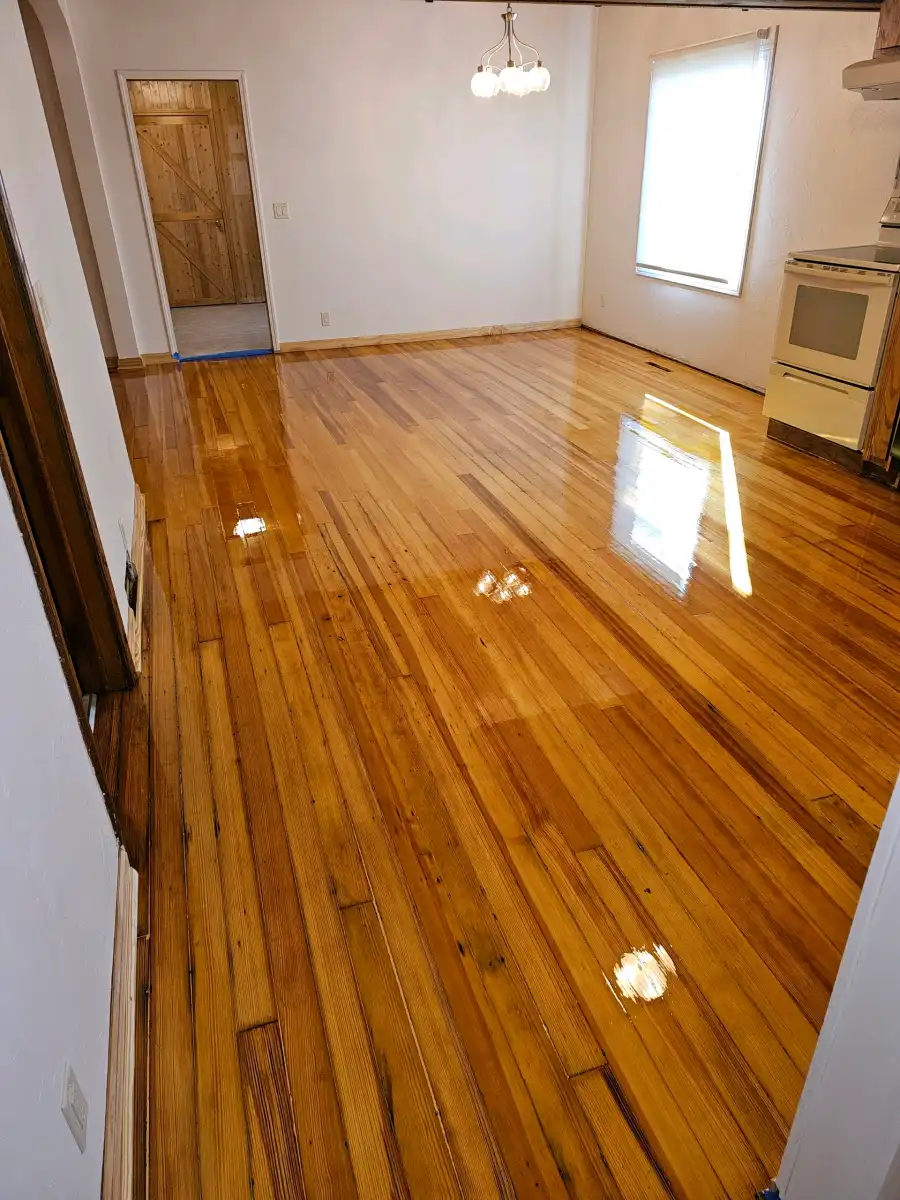

Step 1: Prepare Your Space and Assess the Floor
Before you touch a single piece of sandpaper, thorough preparation determines whether your refinishing project succeeds or becomes a costly mistake. Start by completely clearing the room of all furniture, rugs, and window treatments. Even small items left behind will collect dust and interfere with your workflow. Seal doorways with plastic sheeting and painter’s tape to contain the considerable dust this project generates. In Blair and the surrounding areas, where older homes often feature original hardwood, you may encounter floors that have been refinished multiple times already. Check the thickness of your flooring by examining a floor register or vent opening. If the wood measures less than three-quarters of an inch thick, or if you can see previous sanding has brought you close to the tongue-and-groove joints, professional assessment becomes essential before proceeding.
Walk every square foot of your floor and mark problem areas with painter’s tape. Look for deep scratches, water stains, warped boards, or protruding nails that need attention. Test a small, inconspicuous area with your planned stain color, as wood species react differently to stains and what looks perfect on a sample board may surprise you on your actual floor. Document your floor’s current condition with photographs from multiple angles. This record proves invaluable if you need to troubleshoot issues mid-project or if you decide partway through that professional services would better serve your timeline and quality expectations.
Step 2: Execute the First Sanding Pass
The first sanding pass removes the existing finish and levels the floor surface, and it requires patience and steady technique. Rent a drum sander and an edger from a reputable equipment supplier, and insist on a thorough operational tutorial before leaving the store. Drum sanders are powerful machines that will gouge your floor in seconds if you stop moving while the drum contacts the wood. Practice your technique with the sander turned off, walking backward in straight lines along the wood grain while maintaining constant motion. Start with 36-grit or 40-grit sandpaper if your floor has a thick polyurethane finish or multiple layers of old varnish. If your floor shows only light wear, begin with 60-grit to preserve as much wood thickness as possible.
Begin sanding in the corner farthest from your exit door, tilting the machine back to lift the drum off the floor before you start the motor. Lower the drum gently once the machine reaches full speed, then walk backward at a steady, deliberate pace. Overlap each pass by two to three inches, and never let the spinning drum rest in one spot. The edger handles the perimeter areas where the drum sander cannot reach. Use the same grit sequence on the edger as on the drum sander, working with a sweeping, arcing motion that follows the floor grain. In older homes common throughout Omaha and Blair, you may encounter floors installed in multiple directions or with decorative borders. These areas demand extra care and sometimes hand-scraping to avoid cross-grain scratches that telegraph through your final finish.
Step 3: Progress Through Finer Grits
Once you have removed the old finish and leveled the floor with your coarse-grit pass, methodically work through finer grits to create the smooth surface that accepts stain evenly. The typical progression moves from your starting grit to 60-grit, then 80-grit, and finally 100-grit or 120-grit for your final pass. Skipping grits creates visible scratch patterns that show through your stain and finish, so resist the temptation to save time by jumping from 40-grit directly to 100-grit. Vacuum thoroughly between each grit change, removing all dust from the floor, the baseboards, and the sanding equipment itself. Dust particles from coarser grits will scratch your floor if they get caught under finer sandpaper.
After your final machine sanding, hand-sand any areas the machines could not reach using a sanding block and the same final-grit paper you used on the machines. Pay particular attention to corners, closets, and areas around radiators or built-in features. Run your hand across the entire floor surface, feeling for rough spots or ridges between sanding passes. Any imperfection you feel now will show dramatically once you apply stain. A tack cloth or slightly dampened microfiber mop removes the fine dust left after vacuuming. This step proves critical because dust contamination causes fish-eyes, bubbles, and adhesion problems in your finish coats. The wood should feel silky smooth and show no trace of the previous finish.
Step 4: Apply Stain for Your Desired Color
Staining presents the moment where your color vision becomes reality, but it also offers the last chance to make critical mistakes. If you prefer the natural wood color, you can skip staining entirely and proceed directly to finishing. For those applying stain, work in manageable sections of three to four floor boards at a time, moving quickly to maintain a wet edge that prevents lap marks. Pour a small amount of stain into a paint tray, and apply it with a lamb’s wool applicator or a lint-free cloth, working along the grain in long, smooth strokes. The wood absorbs stain at different rates depending on grain density, species, and how evenly you sanded, so watch carefully as you work.
Allow the stain to penetrate for the time specified by the manufacturer, typically five to fifteen minutes, then wipe away the excess with clean, lint-free cloths. The longer stain sits before wiping, the darker your color becomes, but leaving it too long causes drying issues and prevents proper finish adhesion. Work systematically from the farthest corner toward your exit, and maintain consistent timing across the entire floor for uniform color. In areas around Fremont and Blair, where humidity fluctuates significantly between seasons, stain drying times can vary from the manufacturer’s guidelines. A humidity level between 40 and 60 percent creates ideal conditions for staining. Too much humidity slows drying and can cause clouding, while insufficient humidity causes the stain to dry too quickly, leading to uneven color and poor penetration. Allow the stain to dry completely according to the product instructions, typically 12 to 24 hours, before applying any finish. Test a small area by lightly touching it with your finger. If any stain transfers, allow more drying time.
Step 5: Seal with Multiple Finish Coats
The finish protects your investment and determines how your floor performs for years to come, making this step worth doing right. Choose between oil-based polyurethane, which offers durability and a warm amber tone, or water-based polyurethane, which dries clear and produces less odor. Oil-based products require better ventilation and longer drying times but generally provide superior scratch resistance. Water-based finishes dry quickly, allowing you to complete your project faster, though they typically require more coats for equivalent protection. Apply the first coat using a high-quality applicator pad attached to a long handle, working in sections and maintaining a wet edge just as you did with stain. Thin, even coats prevent drips, bubbles, and the clouding that occurs when finish is applied too heavily.
Move with the grain in long, overlapping strokes, and avoid going back over areas that have begun to dry. This creates drag marks that remain visible after the finish cures. Allow the first coat to dry according to the manufacturer’s specifications, then lightly sand the entire floor with 220-grit sandpaper or a sanding screen attached to a buffer. This process, called screening, removes any dust particles that settled into the wet finish and provides tooth for the next coat to bond properly. Vacuum thoroughly and tack the floor before applying the second coat. A minimum of three coats provides adequate protection for residential floors, while high-traffic areas benefit from a fourth coat. When working during summer months in eastern Nebraska, keep windows closed and run air conditioning to control humidity and maintain consistent temperatures. Finish applied in temperatures outside the 60 to 80 degree range or in high humidity may dry improperly, causing adhesion failures or a cloudy appearance that requires complete removal and reapplication.