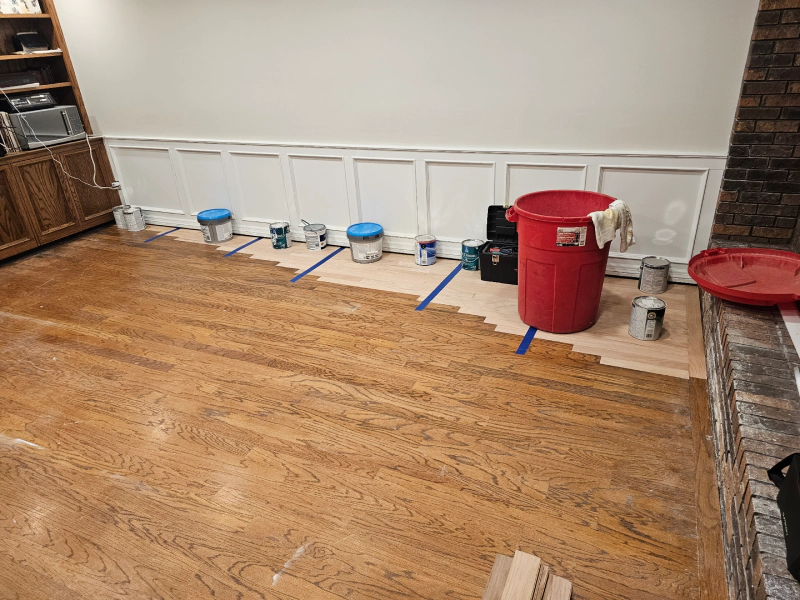

Skipping Proper Subfloor Preparation Before Installing Hardwood
The most damaging error in hardwood flooring installation begins before a single plank touches the ground. Many homeowners and inexperienced installers underestimate the critical role of subfloor preparation, assuming that cosmetic imperfections will be hidden once the hardwood is laid. In reality, any unevenness, moisture imbalance, or structural weakness in the subfloor telegraphs directly through the finished floor, causing gaps, squeaks, cupping, and premature failure.
A properly prepared subfloor must be clean, dry, level, and structurally sound. In Blair and the greater Omaha area, where seasonal humidity swings are pronounced, subfloor moisture content becomes especially critical. Concrete subfloors that have not cured fully or wooden substrates with moisture levels above 12 percent will transfer that moisture into your new hardwood, leading to expansion, warping, and finish degradation within months. Professional hardwood floor installers use moisture meters and laser levels to verify conditions before beginning work, ensuring the surface varies no more than 3/16 inch over a ten-foot span.
Investing time in subfloor correction may add a few days to the project timeline, but it prevents thousands in repair costs down the line. Proper preparation includes patching voids, sanding high spots, applying moisture barriers where needed, and allowing adequate drying time. This foundational step sets the stage for the next common mistake that often follows rushed installations.
Rushing the Acclimation Period for Your Hardwood Flooring Materials
Wood is a hygroscopic material, meaning it absorbs and releases moisture in response to its environment. When hardwood flooring arrives at your home, it has been stored in a warehouse or transported in conditions that differ significantly from your interior climate. Installing it immediately, without allowing it to acclimate to the temperature and humidity of the installation space, is a recipe for dimensional instability. Boards that have not acclimated will expand or contract after installation, creating unsightly gaps in winter or buckling in summer.
Professional hardwood flooring contractors in the Blair area understand that acclimation is not optional. The process typically requires stacking unopened boxes of flooring in the installation room for at least 72 hours, though seven to ten days is preferable for optimal results. During this period, the wood equilibrates to the ambient moisture content of your home, minimizing post-installation movement. Heating and cooling systems should run at normal settings during acclimation, and the room’s relative humidity should be maintained between 30 and 50 percent.
Skipping or shortening this step saves a few days but can cost you thousands in repairs when boards begin to gap, cup, or crown. Many flooring manufacturers will void warranties if proper acclimation is not documented. Patience during this phase protects both your financial investment and the long-term beauty of your floors, preparing the way for the next critical decision point in the installation process.
Ignoring Moisture Barriers and Environmental Controls During Installation
Moisture is the silent destroyer of hardwood floors, and failing to manage it properly during and after installation leads to some of the most expensive flooring failures. In Nebraska’s climate, where summer humidity can soar and winter air turns dry, the wood in your floor is constantly responding to moisture levels in the air and subfloor. Without appropriate moisture barriers and environmental controls, hardwood flooring installation becomes a temporary fix rather than a permanent upgrade.
Experienced hardwood floor installers assess the entire moisture profile of a project before starting work. Over concrete subfloors, a vapor barrier is essential to prevent ground moisture from migrating upward into the wood. Even over wooden subfloors, installers may recommend underlayments with moisture-blocking properties, especially in basements or ground-level installations. Equally important is controlling the indoor environment: if a home’s HVAC system is not running during installation, or if windows are left open, the flooring is exposed to extreme conditions that compromise stability.
Moisture-related failures manifest as cupping (edges higher than the center), crowning (center higher than edges), or widespread gaps between boards. Professional flooring services include pre-installation moisture testing, barrier installation where needed, and guidance on maintaining consistent indoor humidity year-round. Investing in proper moisture management protects your floor against seasonal extremes and transitions naturally into another often-overlooked aspect of successful installations.
Using Improper Fastening Methods That Compromise Floor Integrity
The way hardwood planks are secured to the subfloor directly determines how well the floor performs over its lifespan. Incorrect fastening techniques, whether from using the wrong nail size, improper spacing, or inadequate adhesive coverage, create loose boards, squeaks, and premature wear. This mistake is often invisible during installation but reveals itself through annoying sounds and movement within the first year.
Professional hardwood flooring installers select fastening methods based on wood species, plank width, subfloor type, and manufacturer specifications. Tongue-and-groove solid hardwood typically requires blind-nailing or stapling at precise angles and intervals, usually every eight to ten inches along each board. Engineered hardwood may be glued, floated, or nailed depending on the product and subfloor conditions. Using a pneumatic nailer set to the wrong pressure can split tongues, while under-fastening leaves boards free to shift and squeak.
In the Blair area, where temperature fluctuations cause wood to expand and contract seasonally, proper fastening allows the floor to move naturally without pulling apart or buckling. Installers must also leave appropriate expansion gaps at walls and transitions, typically one-half to three-quarters of an inch, to accommodate this movement. Cutting corners on fastening saves time upfront but leads to callbacks, repairs, and dissatisfied homeowners. Correct technique ensures a quiet, stable floor that performs beautifully, which brings us to the final critical mistake that affects long-term appearance.
Overlooking Proper Finishing Techniques and Post-Installation Care Guidance
The final costly mistake occurs when installers or homeowners neglect the finishing process or fail to establish a proper maintenance routine. Even perfectly installed hardwood flooring will deteriorate quickly without an appropriate finish and ongoing care. Whether you are installing unfinished hardwood that requires on-site finishing or prefinished planks that need edge sealing and transition detailing, the quality of the final protective layer determines how well your investment holds up to daily use.
Wood floor refinishing and finishing require specialized knowledge of product compatibility, application techniques, and curing times. Oil-based polyurethane offers durability but requires longer curing periods and produces strong odors. Water-based finishes dry faster and emit fewer fumes but may require more coats for equivalent protection. In commercial settings or high-traffic residential areas, professional hardwood flooring contractors often recommend aluminum oxide finishes for superior scratch resistance. Equally important is educating homeowners on daily and seasonal maintenance: using appropriate cleaning products, controlling indoor humidity, placing rugs in high-traffic areas, and refinishing when wear becomes visible rather than waiting until the wood is damaged.
Flooring services that include finish application and maintenance guidance protect your floors for decades, while DIY shortcuts or neglect lead to premature wear, water damage, and costly full replacements. A well-finished and maintained hardwood floor retains its beauty and value, making this final step as important as every decision that came before it.